Understanding the Loading / Discharging and Air Valves of T14 ISO TANK : A Complete Guide to Using Adapters for Fast Loading and Unloading

Understanding the Loading/Discharging and Air Valves of T14 ISO TANK : A Complete Guide to Using Adapters for Fast Loading and Unloading


Meta Description
To safely load or unload ISO TANK T14 containers, it’s essential to understand the specifications of the valves and choose the right adapters. This article explains the function of the loading/unloading and air valves and highlights how to connect the right fittings for fast and secure operations.


Introduction

ISO TANK T14 is primarily used to transport chemicals. To load or unload these tanks, the correct adapters must be selected based on the pipeline connections at your factory or warehouse. This guide walks you through the specifications of ISO TANK T14 valves and how to properly use adapters to ensure operational safety.


1.   ISO TANK T14 Loading/Unloading Valve: Specs and Adapter Installation

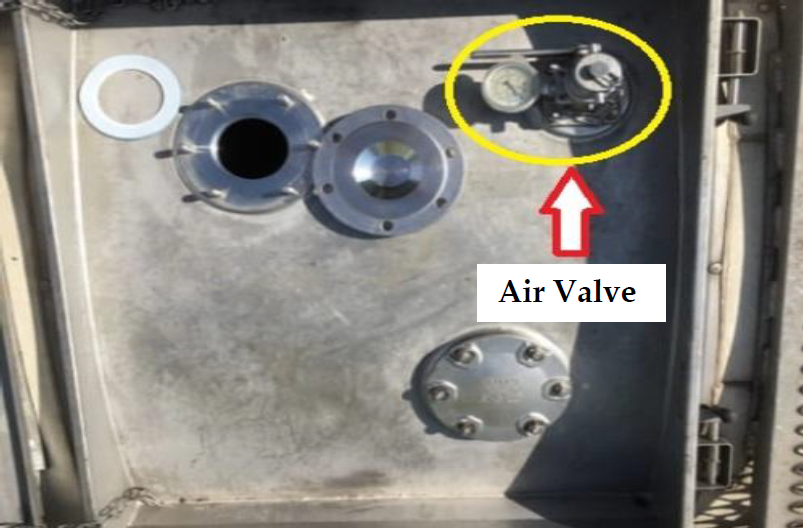
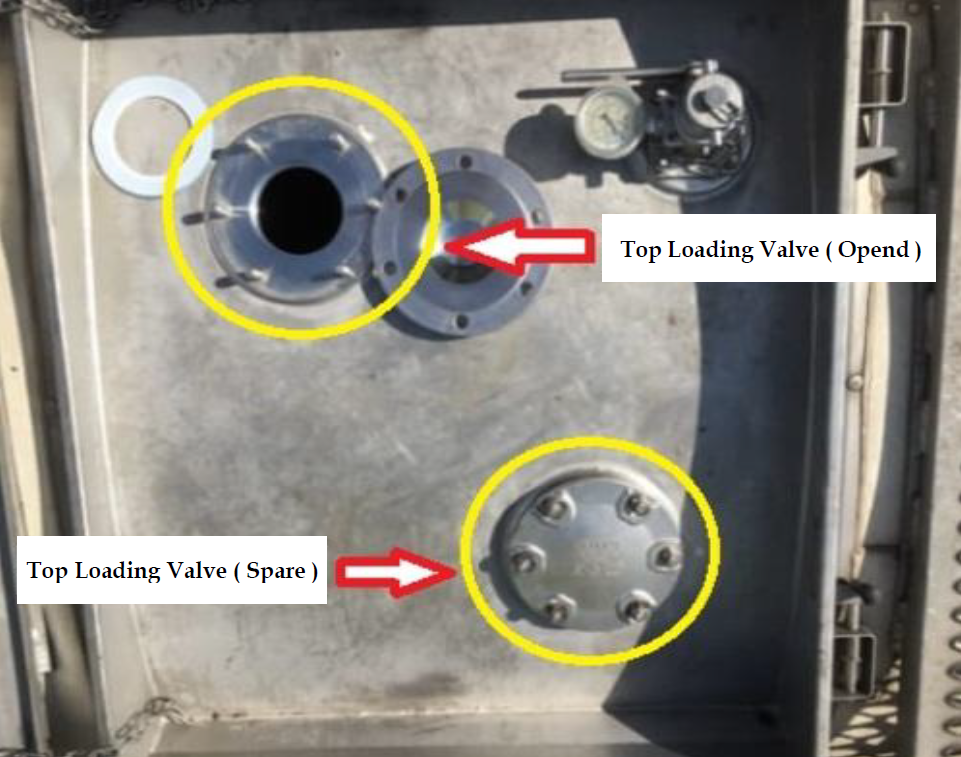
ISO TANK T14 is designed for top-loading and top-unloading only—there is no bottom valve. The loading/unloading valve is installed on the top and measures 3 inches (DN80). Before use, the blind plate must be removed so pipelines can be connected for chemical loading or unloading. It’s crucial to match your factory or warehouse connections to the correct quick adapter. Normally sealed with a blind plate, which should be removed before use.

Closed valve                                                                    Opened valve


(1) Adapter Components (For valves with 4-bolt flanges)

  • Flange Adapter :
    • Size: DN80
    • Pressure: PN10
    • Type: 4-bolt threaded flange
    • Function: Connects the base of the loading valve to the F-type adapter

  • Flange Gasket :
    • Size: DN80
    • Spec: ISO PN10/40
    • Function: Inserted between the flange and F-type adapter to improve air-tightness and prevent leakage.

  • F-Type Adapter (3″ Male Thread):
    • Connects the flange to the 3-inch quick coupling
    • Also known as “male thread” or “external thread”

  • 3″ Quick Coupling :
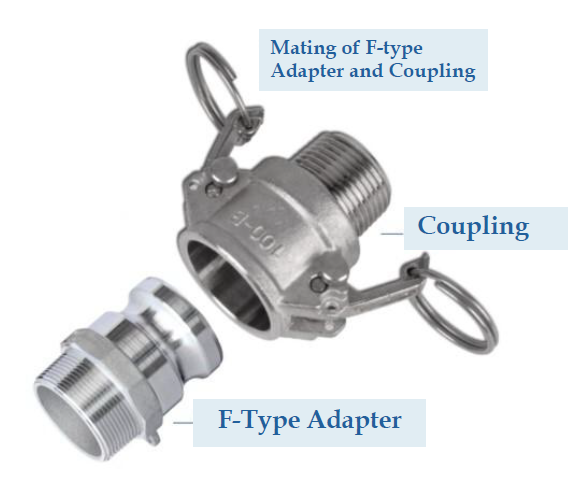
    • B-Type : Male thread (external)
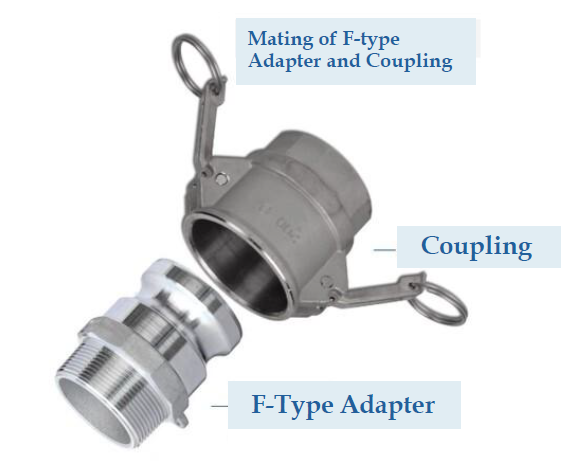
    • D-Type : Female thread (internal)
    • Choose the type based on the thread type of the factory/warehouse pipe :
      • Use B-Type if their pipe has female threads
      • Use D-Type if their pipe has male threads
    • Principle : Male thread connects to female thread


3″ B-Type Coupling
3″ D-Type Coupling
(2) Connection Order

  1. DN80 PN10 Flange
  2. DN80 ISO PN10/40 Gasket
  3. F-Type Adapter (3″ Male Thread)
  4. 3″ Quick Coupling (B-Type or D-Type)


(3) Key Considerations

  • Thread Compatibility : Ensure that the threads on the F-type adapter and the quick coupling match. ISO TANKs typically use BSP (British Standard Pipe) threads.
  • Leak Prevention : Use appropriate gaskets between all connections. Ensure a tight seal between adapter and coupling.
  • Material : Most parts are made from 304 or 316 stainless steel. 316 offers higher corrosion resistance—ideal for strong acids and alkalis.
  • Coupling Sizes : Available in 1/4″, 1/2″, 3/4″, 1″, 2″, 3″, 4″, and 6″.


2.   ISO TANK T14 Air Valve: Specs and Adapter Installation

The air valve, located on the top of the ISO TANK, is 1.5 inches (DN40). Before injecting air or nitrogen, the cap must be removed, and a pipeline must be connected using the appropriate quick adapter.
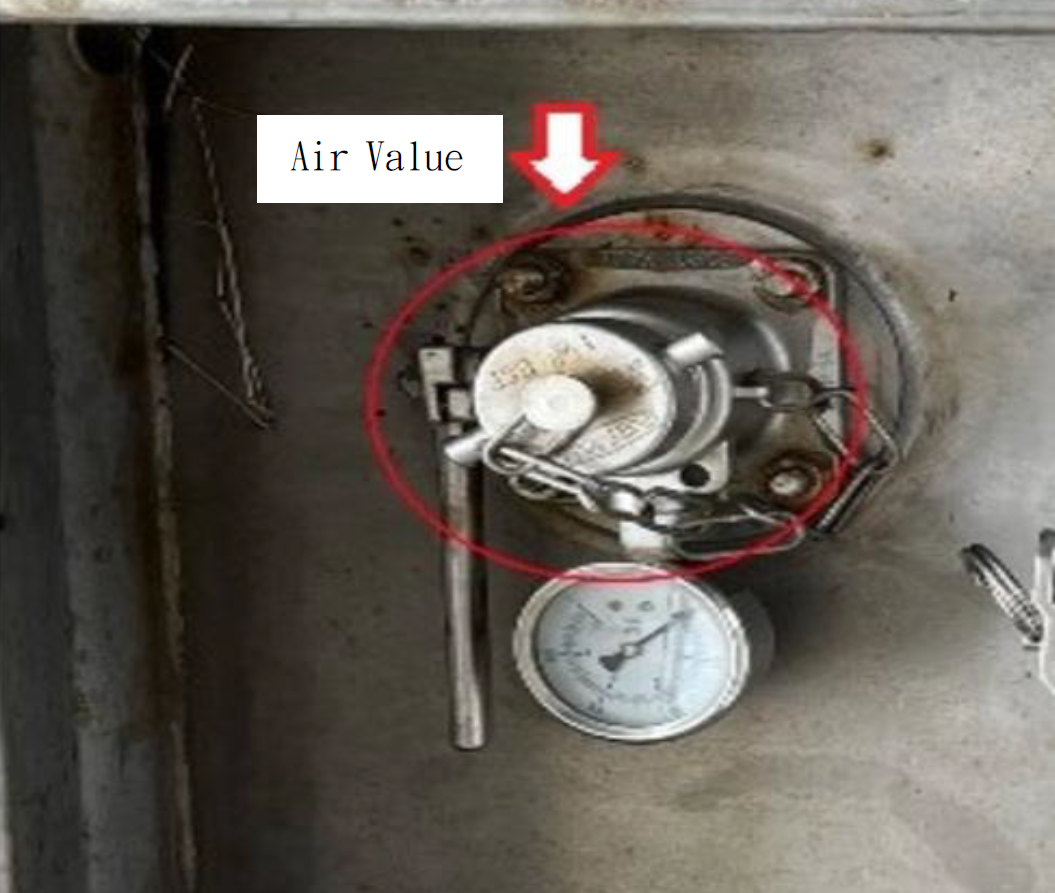


(1) Adapter Components

  • A-Type Adapter (1.5″ Female Thread):
    • Connects the air valve to a 1.5″ quick coupling

  • 1.5″ Quick Coupling:
    • B-Type : Male thread
    • D-Type : Female thread
    • Choose based on the connection type at your facility


1.5″ B-Type Coupling

1.5″ D-Type Coupling


(2) Connection Order

  1. Air Valve
  2. A-Type Adapter (1.5″ Female Thread)
  3. 1.5″ Quick Coupling (B-Type or D-Type)


(3) Key Considerations

  • Thread Compatibility : Match the thread types. ISO TANK valves use BSP threads.
  • Leak Prevention : Use gaskets and confirm tight connections between adapters and couplings.
  • Material : 304 or 316 stainless steel is commonly used, with 316 offering superior corrosion resistance.
  • Coupling Sizes : Available in 1/4″, 1/2″, 3/4″, 1″, 2″, 3″, 4″, and 6″.


Published Date : January 24, 2025
Understanding the Loading / Discharging and Air Valves of T11 ISO TANK : A Complete Guide to Using Adapters for Fast Loading and Unloading

Understanding ISO TANK T11 Loading / Unloading and Air Valves : A Complete Guide to Using Adapters for Quick and Safe Operations


Meta Description
To operate the ISO TANK T11’s loading/discharging and air valves safely and effectively, it’s crucial to understand the specifications and choose the right adapters. This article introduces the main functions of ISO TANK T11 valves and shares important tips for using adapters to ensure safe and efficient cargo transfer.


Introduction

ISO TANK T11 is commonly used for transporting chemicals. The connectors for its loading/discharging and air valves must match the factory or warehouse pipeline sizes to ensure a proper fit. This guide helps you understand the structure of ISO TANK T11 adapters and teaches you how to use them correctly.


1.   Top Loading Valve of ISO TANK T11: Specifications & How to Install a Quick Coupling

The top loading valve is located at the top of the ISO TANK, sized at 3 inches (DN80). Before loading, the blind flange must be removed, and the pipeline must be connected. Ensure you confirm the connection size at your factory or warehouse and select a matching quick coupling. Below are the adapter components, connection sequence, and key precautions.

(1) Adapter Components (4-bolt or 6-bolt blind flange options)

  • Size : DN80
  • Pressure Rating : PN10
  • Thread Type : 6-bolt flange (external thread)
  • Adapter : Connects the base of the loading valve to an F-type male-threaded coupling.

  • Flange Gasket : DN80, spec: ISO PN10/40. Placed between the 6-bolt flange and F-type adapter to ensure air-tightness and prevent leakage.

  • F-Type Adapter (3″ male thread) : Connects the DN80 PN10 flange to a 3-inch camlock quick coupling.

  • 3″ Camlock Quick Coupling:
    • B-Type (male thread)

    • D-Type (female thread)

Choose based on whether the pipeline at the factory/warehouse uses male or female threads.

(2) Connection Sequence:

DN80 PN10 6-bolt flange → Flange Gasket DN80 ISO PN10/40 → F-Type Adapter (3″ male thread) → 3″ Camlock Quick Coupling (B-type or D-type)


(3) Precautions:

  • Thread Type: Ensure that the F-type adapter and quick coupling have the same thread type. ISO TANKs use BSP (British Standard Pipe) threads.
  • Leak Prevention: Gaskets must be used at all connection points, and all joints must be tightly secured.
  • Material: Typically 304 or 316 stainless steel. Type 316 offers better corrosion resistance against strong acids/alkalis.
  • Available Sizes: 1/4″, 1/2″, 3/4″, 1″, 2″, 3″, 4″, 6″


2.   Bottom Discharge Valve of ISO TANK T11: Specifications & How to Install a Quick Coupling

The bottom valve is located at the bottom of the ISO TANK, sized at 3 inches (DN80) with BSP male threads. Before discharging, remove the valve cap and connect the pipeline. Confirm the size at your destination and select a suitable coupling.

(1) Adapter Components :

  • A-Type Adapter (3″ female thread): Connects the bottom valve to a 3″ camlock quick coupling.

  • 3” Camlock Quick Coupling:
    • B-Type (male thread)

    • D-Type (female thread)

Choose based on the pipeline thread type.

(2) Connection Sequence:

Bottom Valve → A-Type Adapter (3″ female thread) → 3″ Camlock Quick Coupling (B-type or D-type)


(3) Precautions:

  • Thread Type: Use matching BSP threads.
  • Leak Prevention: Insert proper-size gaskets and ensure tight connections.
  • Material: 304 or 316 stainless steel, depending on corrosion resistance needs.
  • Available Sizes: 1/4″, 1/2″, 3/4″, 1″, 2″, 3″, 4″, 6″


3.   Air Valve of ISO TANK T11: Specifications & How to Install a Quick Coupling

The air valve is mounted on the top of the ISO TANK and sized at 1.5 inches (DN40). Before injecting air or nitrogen, remove the cover and attach the hose. As always, ensure compatibility with factory/warehouse connectors.

(1) Adapter Components:

  • A-Type Adapter (1.5″ female thread) : Connects the air valve to a 1.5″ camlock quick coupling.
  • 1.5″ Camlock Quick Coupling:
    • B-Type (male thread)

    • D-Type (female thread)

Choose according to the thread type of the destination pipeline.

(2) Connection Sequence:

Air Valve → A-Type Adapter (1.5″ female thread) → 1.5″ Camlock Quick Coupling (B-type or D-type)


(3) Precautions:

  • Thread Type: Use consistent BSP threads throughout.
  • Leak Prevention: Use matching gaskets and secure all joints firmly.
  • Material: Choose between 304 or 316 stainless steel based on your cargo’s chemical properties.
  • Available Sizes: 1/4″, 1/2″, 3/4″, 1″, 2″, 3″, 4″, 6″


Published Date : January 23, 2025

How to Use ISO Tank Containers Safely? A Guide to Inspection, Cleaning, and Maintenance

How to Use ISO Tank Containers Safely? A Guide to Inspection, Cleaning, and Maintenance


Meta Description

ISO tank containers are essential for transporting and storing liquid chemicals. However, mishandling or collisions may cause damage to the containers. This article explains how to ensure safe usage of ISO tanks through proper testing, cleaning, and maintenance procedures.


Introduction

Cleaning and maintaining ISO tank containers is vital—not only to prevent cross-contamination between different cargoes that may affect product quality, but also to ensure safety during transportation and storage. This article walks you through how to test, clean, and repair ISO tanks for safe and reliable use.


1.   How to Safely Use ISO Tank Containers : Key Testing and Inspection Procedures

(1) Conduct One-Bar Pressure & Leak Testing Before Use

Before each use, ISO TANK containers must undergo a one-bar pressure and leak test. This test ensures that all valves are pressure-tight and free from leaks—verifying the container is safe for use.


(2) Schedule Periodic Internal Pressure Tests

From the manufacturing date, ISO TANK containers must be tested every 30 months:

  • At 30 months: Pneumatic (air) pressure test
  • At 60 months: Hydrostatic (water) pressure test
  • This cycle repeats every 30 months.

A certified third-party inspector must verify that the tank maintains pressure with no leakage. Only with a valid Tank Periodic Inspection Certificate can the tank be deemed safe for transport.


2.   How to Clean ISO Tank Interiors to Avoid Cargo Contamination

(1) Create a Tailored Cleaning Plan Based on Cargo Characteristics

To achieve the best cleaning results, tailor the cleaning method based on the cargo’s nature (e.g., water-based, oil-based, odor intensity, or viscosity). The typical cleaning process includes:

  1. Fogging Treatment : Use a compressor to spray a low-pressure chemical solvent that dissolves residue inside the tank.
  2. High-Pressure Water Jetting : Use a compressor-powered 360° water jet to remove internal residues.
  3. Visual Inspection : A trained technician enters the tank to verify cleanliness.
  4. Drying : Use blowers to circulate air until the tank is fully dry and free of water marks.
  5. Third-Party Cleanliness Certification : An inspector certifies the tank’s cleanliness to prevent contamination.


(2) Preventing Contamination in ISO Tanks

After every cleaning, the tank must pass inspection and be certified clean by a third-party agency. Only then can it be used to load new cargo without risk of contamination.


3.   What Does ISO TANK Maintenance Involve?

After each use, a comprehensive inspection of the ISO tank’s interior and exterior must be conducted. Professional personnel should check for dents, corrosion, or damage and take appropriate repair actions.

(1) Inspecting the Inner Tank

After cleaning, check for:

  • Corrosion: Weld, smooth, and acid-treat affected areas.
  • Deformation: Smooth out any protrusions caused by external impact.

Choose tank types according to International Maritime Dangerous Goods (IMDG) Code regulations. For corrosive substances, use tanks lined with PTFE or PFA to prevent damage.


Further reading : What Is an ISO Tank and What Is It Used For? A Complete Guide to ISO Tank Types, Sizes, Capacities, and Loading Ratios


(2) Inspecting ISO Tank Valves

Valves such as safety valves, air valves, and bottom valves must be tested after each return to the depot. Faulty valves must be replaced immediately to ensure safe operation.


(3) Inspecting the Tank Frame and Accessories

Inspect the tank body and accessories for damage each time it returns to the depot. Any damage must be repaired immediately to maintain functionality and safety.


Published Date: January 22, 2025

What Is an ISO Tank and What Is It Used For? A Complete Guide to ISO Tank Types, Sizes, Capacities, and Loading Ratios

What Is an ISO Tank and What Is It Used For? A Complete Guide to ISO Tank Types, Sizes, Capacities, and Loading Ratios


Meta Description

ISO tanks are considered the safest containers for transporting or storing liquid chemicals and food-grade materials, significantly reducing the risk of leakage during transit or storage. This article explains the types, sizes, volumes, and loading ratios of ISO tanks to help you quickly understand these internationally standardized tank containers.


Introduction

An ISO tank is built in accordance with standards set by the International Organization for Standardization (ISO) to ensure safety during transportation. ISO tanks come in a wide range of capacities—from 7,000 liters to 30,000 liters—making them suitable for various logistics and storage needs. Why have they become widely accepted across industries? In this article, we’ll explore the unique advantages of ISO tanks and why they’ve earned such a strong reputation.


1.   What Is an ISO Tank and What Is It Used For?

An ISO tank (International Standard Tank Container) is a container specifically designed for transporting or storing liquids, gases, or powders. It is made from robust materials like carbon steel or stainless steel (304 or 316L) and is internationally recognized for its quality and safety. These tanks comply with standards such as those from the ISO and the International Maritime Dangerous Goods (IMDG) Code.

ISO tanks are available in a variety of capacities and can easily transition between land and sea transport, enhancing flexibility and reducing logistics costs.


2.   Advantages of ISO Tanks: Safety, Efficiency, Sustainability, and Flexibility

(1) Enhanced Safety

Compared to traditional drum or flexibag methods, ISO tanks provide superior airtightness, significantly lowering the risk of leaks or contamination. If you’re looking for a safe and eco-friendly way to transport goods, ISO tanks offer a more secure solution.


(2) High Transport Efficiency

ISO tanks can carry large volumes of liquids, gases, or powders in a single shipment, reducing the frequency of loading and unloading. This also lowers labor and packaging costs, making ISO tanks the most efficient solution for transporting chemical goods.


(3) Environmentally Friendly

ISO tanks help prevent leaks during long-distance transport and storage. They can even reduce fuel consumption and CO₂ emissions by up to 70%, making them an eco-conscious option for logistics.


(4) Cost-Effective

With a lifespan of 20+ years under normal use, ISO tanks can be reused over time, significantly cutting down overall logistics costs.


(5) High Flexibility

ISO tanks come in various configurations tailored to different cargo types, including food-grade, industrial-grade, and electronic-grade tanks for liquids, and high- or low-pressure tanks for gases. Multiple volume options are available to suit diverse transport requirements, all while complying with IMDG standards.


3.   Types of ISO Tank Containers: Which One Fits Your Needs?

Chemical products are generally classified as hazardous or non-hazardous. Hazardous cargo is assigned a UN number and must comply with the IMDG T-code regulations (T1 to T75) for tank design.


(1) T11 ISO Tank

The T11 ISO tank is the most commonly used type, suitable for non-hazardous cargo and hazardous cargo classified as T11 or lower under the IMDG Code. It can be equipped with steam heating pipes for indirect heating via the inner vessel—useful for melting solid products into liquids before unloading via gravity or external pumps.


(2) T14 ISO Tank

ISO TANK T14 is also for non-hazardous cargo and cargo classified as T14 under the IMDG Code. It is a top-loading only tank without a bottom valve, offering better gas-tight sealing.


(3) T14 ISO Tank with PTFE Lining

This is a T14 tank with an inner PTFE lining, making it suitable for highly corrosive materials or high-purity chemicals like electronic-grade products.


(4) T50 (IMO 5) & T75 (IMO 7) ISO Tanks

These tank types are designed for gaseous cargo, with differences based on the required working and test pressures of the inner vessel as specified by IMDG regulations.


(5) Cement Tank

Specifically designed for bulk cement transport or storage, this tank is built to handle dry powder cargo.


(6) AHF Tank – Anhydrous Hydrofluoric Acid

Built for the safe handling of anhydrous hydrofluoric acid, a highly corrosive and hazardous chemical, this specialized tank requires strict safety measures.


(7) High-Temperature Tank

Designed with 316L stainless steel inner linings and expanded steam heating surfaces, this ISO tank supports indirect heating up to 200°C, making it ideal for high-melting-point or heat-sensitive materials.


4.   ISO Tank Loading Ratios According to the IMDG Code

For Non-Hazardous Goods :

  • Minimum loading ratio: 75%
    Calculation:
    Tank volume × cargo density × 75% = net cargo weight
    Example:
    24,000 L × 0.80 × 75% = 14,400 kg
  • Maximum loading ratio: 97%
    Calculation:
    24,000 L × 0.80 × 97% = 18,624 kg


For Hazardous Goods :

  • Minimum loading ratio: 80%
    Calculation:
    24,000 L × 0.80 × 80% = 15,360 kg
  • Maximum loading ratio: 95%
    Calculation:
    24,000 L × 0.80 × 95% = 18,240 kg


Always confirm road weight restrictions at both the origin and destination ports before finalizing your loading volume.


Published Date : January 21, 2025

error: Content is protected !!